

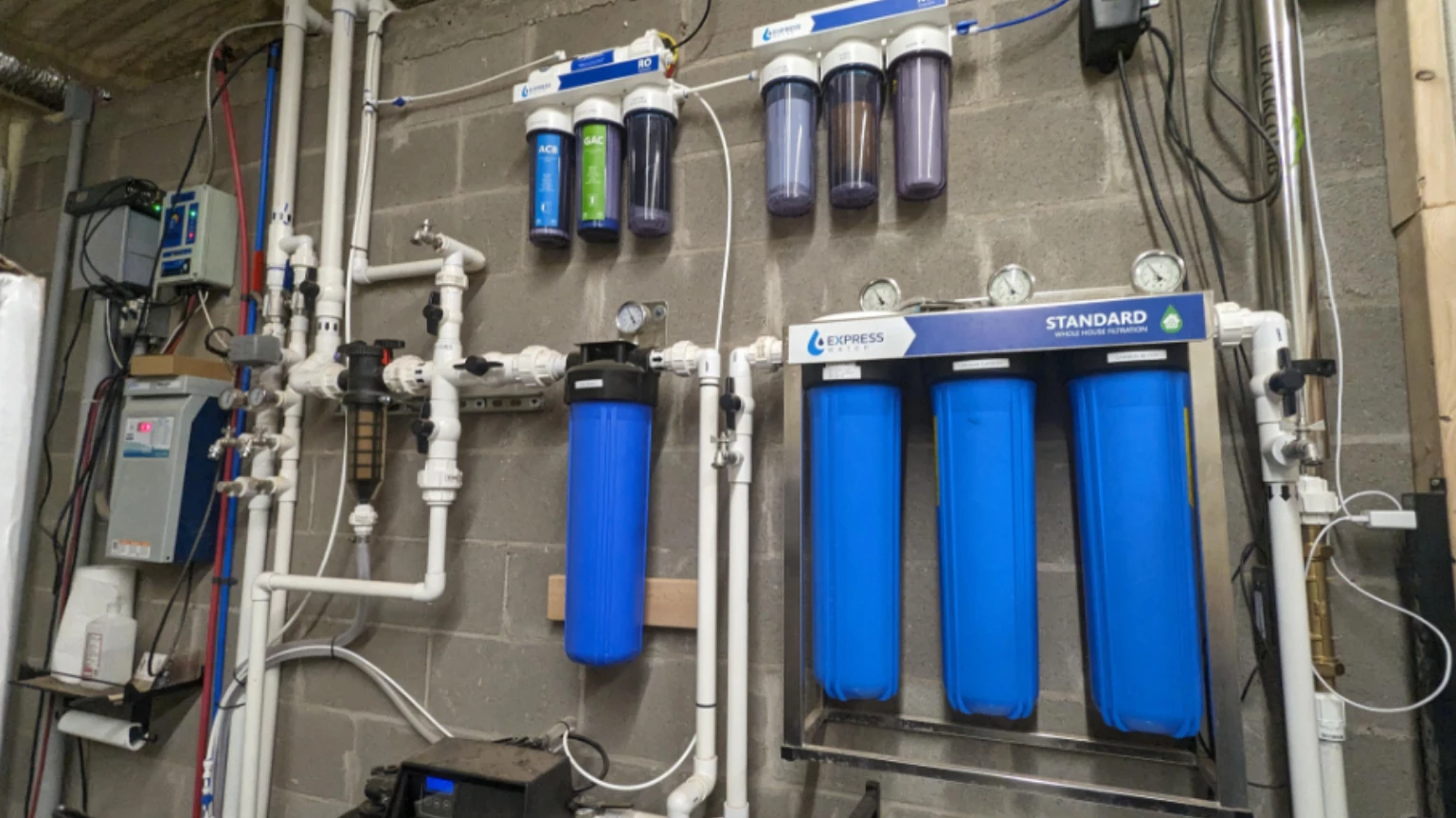
A smaller sediment filter micron rating for well water can capture finer particles, but that does not automatically make it the better choice. A filter that is too fine for the amount and type of sediment present may restrict flow, reduce pressure, or require more frequent replacement. The right filter depends on particle size, household demand, filter design, and any treatment equipment installed downstream.
For homeowners with a Boone, NC well system, filter selection should start with understanding what the water actually contains and what the filtration system needs to protect. CDC guidance recommends testing private well water and choosing treatment based on the specific problem rather than assuming one filtration method solves every issue.
What Nominal and Absolute Ratings Mean
Micron ratings describe the approximate size of particles a filter is designed to capture.
One micron is one millionth of a meter. In practical terms, the smaller the micron number, the finer the filtration.
That sounds straightforward until two filters both say “5 micron” but use different rating systems.
The distinction between nominal and absolute ratings matters.
CDC explains that an absolute pore-size rating means the pores are at or below the stated size, while a nominal or mean rating represents an average pore size. A nominal filter may therefore allow some particles larger than the stated micron value to pass through.
Manufacturers use similar distinctions. For example, 3M defines a nominal-rated filter as one intended to capture a stated percentage of particles at or above a given size, while an absolute rating represents a much higher removal efficiency at that size. The exact percentage can vary by manufacturer, so product specifications should always be checked rather than assuming every “nominal” or “absolute” label follows the same test method.
What is the difference between nominal and absolute ratings?
A nominal rating is generally an approximate performance rating, while an absolute rating is intended to represent a much stricter particle-size cutoff.
This distinction is important when comparing products.
A 5-micron nominal cartridge should not automatically be treated as equivalent to a 5-micron absolute cartridge.
The sediment filter micron rating water label is only one part of the specification. You also need to know:
- Whether the rating is nominal or absolute
- The cartridge material
- Filter dimensions
- Recommended flow rate
- Dirt-holding capacity
- Maximum operating pressure
- Manufacturer replacement guidance
That is why choosing a filter based only on the smallest micron number can create problems.
Match Sediment Type to Filter Design
Not all sediment behaves the same way.
A well system may encounter relatively coarse sand, finer silt, rust particles, suspended mineral material, or a combination of particle sizes.
The right filter needs to match the type and amount of material entering the system.
Someone seeing obvious sand may need a different filtration strategy from someone dealing with very fine suspended material.
Filter design matters too.
Common sediment cartridges can include:
- Pleated filters
- Spun or melt-blown filters
- String-wound filters
- Depth filters
- Surface filters
Each design has different characteristics related to particle capture, dirt-holding capacity, flow, and replacement frequency.
Pentair notes that mechanical filtration depends on both micron rating and the filter’s required flow rate and overall capacity. It also explains that many mechanical filters use nominal ratings rather than absolute ones.
That means two cartridges with the same stated micron rating may perform differently in the same home.
What micron filter is best for well water?
There is no single best micron rating for every well.
A professional should consider:
- Particle size
- Sediment load
- Household water demand
- Existing water pressure
- Filter housing size
- Well pump performance
- Downstream treatment equipment
- Manufacturer specifications
For example, installing a very fine cartridge as the first and only sediment barrier may cause it to load quickly if the well produces a significant amount of larger debris.
A coarser filter may sometimes make more sense as an initial stage, with finer filtration afterward if the water and treatment goals justify it.
If sediment itself is the main concern, Well Doctor’s guide to sand-free faucets and solutions for well water problems provides broader context. Filter selection, however, should still be based on the actual system rather than simply picking a rating from a chart.
Flow and Pressure Tradeoffs
Finer filtration creates more resistance to water movement.
That does not mean every low-micron cartridge will cause poor pressure, but the risk increases when the filter is undersized, heavily loaded, or poorly matched to the household’s flow requirements.
Does a finer sediment filter reduce pressure?
It can.
A smaller pore structure creates a more restrictive path for water. As sediment accumulates in the cartridge, resistance can increase further.
The result may be noticeable as:
- Reduced flow at multiple fixtures
- Lower pressure during simultaneous water use
- Longer appliance fill times
- More obvious pressure loss when showers and faucets run together
This is why manufacturer flow specifications matter.
The housing, cartridge diameter, cartridge length, media type, and incoming pressure all influence performance.
A larger-capacity filter housing can often handle higher household demand than a small cartridge with the same micron rating, but even then the cartridge has to be matched to the application.
Pentair specifically identifies flow requirements and filter capacity as two of the key considerations alongside micron rating.
A technician evaluating sediment filter installation in Boone, NC should therefore look at more than the filter label.
The evaluation may include:
- Current household pressure
- Flow demand
- Existing filter size
- How quickly cartridges clog
- Pump and pressure-tank operation
- Sediment type
- Existing treatment equipment
A filter that captures very fine material but noticeably reduces usable flow may not be a good system design.
The goal is effective filtration without creating an unnecessary restriction.
When Staged Filtration Makes Sense
Some well systems benefit from more than one level of sediment filtration.
This is known as staged filtration.
Instead of asking one fine filter to capture everything from coarse grit to tiny suspended particles, the system uses filters in sequence.
For example, a first stage may capture larger material while a later stage handles smaller particles.
This can reduce the sediment load placed on the finer cartridge.
Should well water use more than one sediment filter?
Sometimes.
Staged filtration can be useful when the water contains a broad range of particle sizes or when downstream equipment needs additional protection.
However, adding more filters also adds resistance to the system.
That means more stages are not automatically better either.
Every additional cartridge has the potential to create pressure drop, especially as it becomes loaded.
A properly designed sequence should consider:
- Micron ratings in each stage
- Cartridge capacity
- Filter housing size
- Expected household flow
- Incoming pressure
- Sediment concentration
- Downstream equipment requirements
The order of filtration also matters.
A common design principle is to remove larger material before smaller material so the finer cartridge does not become overloaded as quickly.
However, the exact ratings should be based on observed sediment and manufacturer specifications rather than a universal formula.
A staged approach may also help protect equipment installed later in the treatment train.
For example, sediment pretreatment may be useful before certain carbon, ultraviolet, membrane, or specialty treatment systems. CDC notes that no single treatment method addresses every water problem and recommends selecting treatment specifically for the contaminant or condition being addressed.
This is where professional water filtration system installation becomes useful. The filter should be considered as one part of the complete water-treatment system rather than an isolated cartridge.
Maintenance and Replacement Factors
Even the right filter will eventually load with sediment.
As particles accumulate, flow resistance usually increases. That can reduce performance even if the micron rating itself was appropriate when the cartridge was new.
Replacement frequency varies widely.
A cartridge might last a relatively long time in one well and clog quickly in another because sediment quantity, particle size, water use, and cartridge capacity are different.
Rather than relying on a universal replacement interval, homeowners should follow the manufacturer’s guidance and pay attention to system performance.
Signs that a cartridge may need attention can include:
- Reduced household flow
- Increasing pressure drop across the filter
- Visible sediment loading
- Shorter periods between noticeable pressure changes
- Manufacturer-recommended service intervals being reached
Some systems use pressure gauges before and after the filter housing so pressure drop can be monitored more directly.
A growing difference between inlet and outlet pressure can indicate increasing restriction.
That kind of information is more useful than replacing cartridges based solely on the calendar.
Maintenance also affects the economics of micron selection.
Suppose a very fine filter captures material well but needs frequent replacement. A slightly coarser or staged setup may provide better overall system performance if it reduces clogging while still meeting the filtration goal.
That is why “smaller micron” and “better filtration system” are not the same thing.
A filtration professional may need to balance:
- Particle removal
- Flow rate
- Pressure
- Cartridge life
- Household demand
- Maintenance burden
Testing should also remain part of the process.
A sediment filter is designed primarily for particulate removal. It should not be assumed to remove dissolved chemicals, bacteria, viruses, or every other potential well-water concern.
CDC recommends testing private well water and selecting treatment based on the specific substance or problem identified. It also notes that no single treatment type protects against every germ or chemical.
For Boone homeowners, that means a cartridge that makes water look clearer should not automatically be treated as proof that the water is microbiologically or chemically safe.
Well water testing and filtration solve different questions.
If your concern involves a health-related contaminant rather than visible sediment alone, testing through an appropriate laboratory and consultation with the local health department or qualified water professional should guide the next step.
Well Doctor also provides broader information for homeowners with a Boone, NC well system who need help evaluating pumps, water quality, filtration, or other well components.
Get a Filtration Assessment
If sediment keeps reaching your fixtures or your current filter affects pressure, we can help evaluate the filtration setup before you change micron ratings.
At Well Doctor LLC, we look at sediment characteristics, household flow, pressure, filter capacity, and existing treatment equipment when discussing filtration options for Boone-area well systems.
Contact us to arrange an assessment and discuss whether a different cartridge, larger filter, staged setup, or other water filtration approach better matches the way your well system actually performs.