

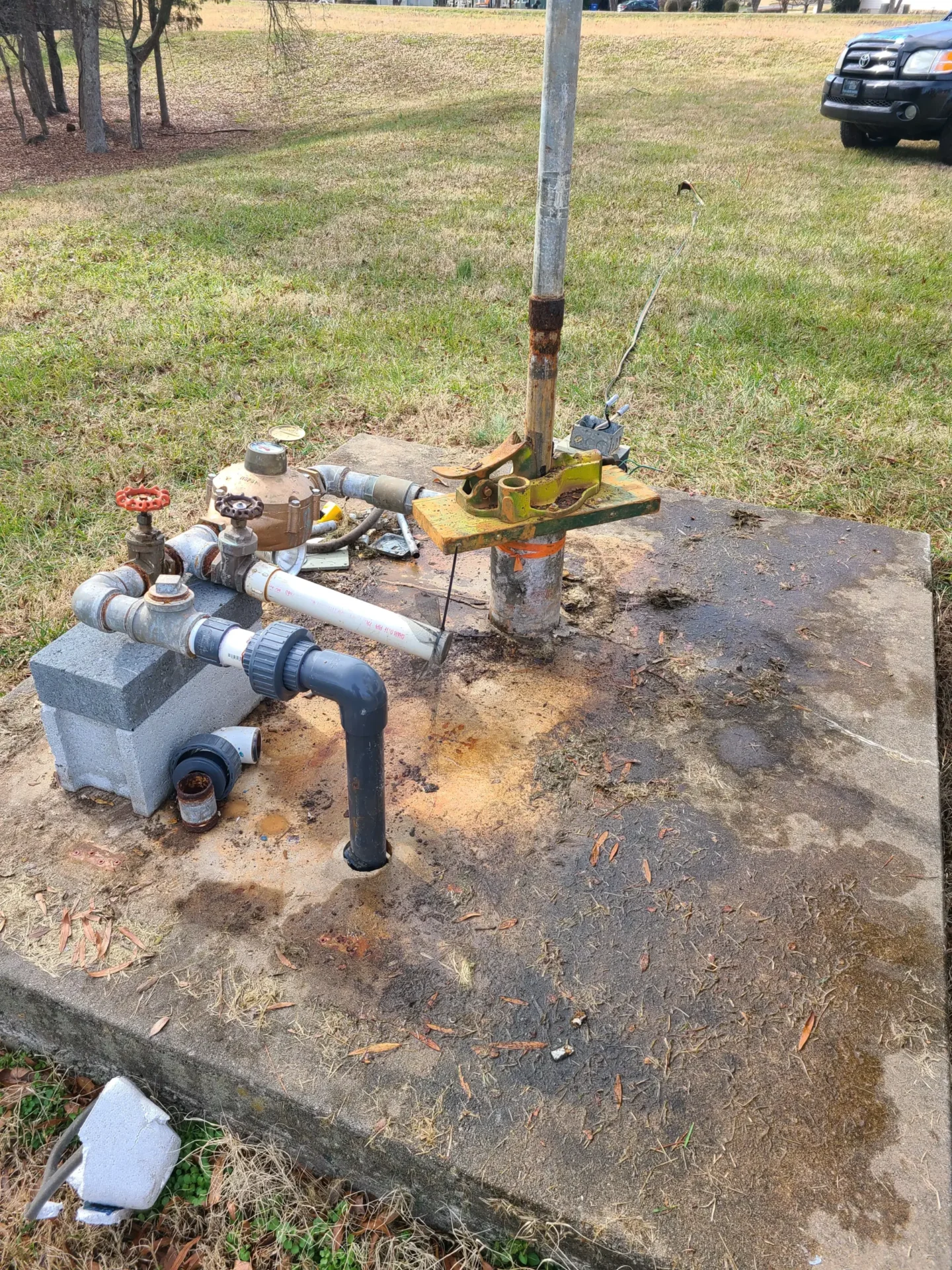
Underground well line leak detection usually starts before anyone digs. A professional first looks at how the well system is holding pressure and determines whether the symptoms point to a buried supply-line leak, pump problem, pressure-tank issue, check-valve fault, or another component.
Once the likely source has been narrowed down, the contractor can choose diagnostic methods that fit the well installation and property. Confirming that the buried line is actually leaking and narrowing the affected section can reduce unnecessary excavation and help avoid replacing equipment that is still functioning.
For homeowners with a Waxhaw, NC well system, symptoms such as unexplained pressure loss, frequent pump operation, or reduced water pressure may justify a well-system assessment rather than immediately assuming the underground pipe has failed.
Signs That Suggest a Buried Supply-Line Leak
The water line between a private well and the house is usually out of sight, so a failure may not announce itself with an obvious stream of water.
Instead, the first clues may come from how the system behaves.
Possible signs include:
- Water pressure dropping unexpectedly
- The well pump running more often than normal
- The pump starting when no fixtures appear to be using water
- Difficulty maintaining normal household pressure
- A wet, soft, or unusually green area along the buried line
- Unexplained water appearing near the well or foundation
- Changes in system behavior without a corresponding increase in household water use
No single symptom confirms an underground leak.
For example, low pressure could result from a pressure-tank problem, pump performance issue, blocked plumbing, or another well-system fault. NGWA recommends having the overall system checked when pressure changes unexpectedly rather than assuming one component is responsible.
That distinction is important.
If the buried line is intact but the pressure tank is malfunctioning, digging up the yard does not fix the problem. If the underground line is leaking but the pump is replaced first, the new pump may still face the same pressure loss.
Professional diagnosis is intended to separate those possibilities.
Can a Well Line Leak Without a Wet Yard?
Yes.
A buried water-line leak does not always create an obvious wet spot at the surface.
Soil conditions, pipe depth, leak size, drainage, landscaping, and the path water takes underground can all affect whether anything becomes visible above ground.
A small leak may also lose water slowly enough that the ground absorbs it without producing standing water.
That is why technicians do not rely solely on visual evidence.
A wet area along the likely route of the water line can be useful information, but the absence of one does not prove that the line is intact.
Instead, system pressure and operating behavior often provide the starting point.
If your main symptom is sudden pressure loss rather than visible leakage, Well Doctor’s well water pressure resources provide broader troubleshooting context. This article focuses specifically on determining whether the buried line between the well and house is responsible.
Separate Line Leakage From Equipment Faults
Before locating a buried leak, the contractor first needs reasonable confidence that there is actually a leak in that line.
Several well-system problems can imitate one.
Pressure-Tank Problems
A pressure tank stores water under pressure so the well pump does not need to start every time a small amount of water is used.
NGWA notes that pressure-tank problems can affect system performance and recommends having the tank checked by the manufacturer or a water-well professional when it is not functioning correctly.
A malfunctioning tank can contribute to unusual cycling, pressure fluctuations, or other symptoms that a homeowner might initially blame on a leak.
Pressure-Switch or Control Problems
The pressure switch tells many conventional well pumps when to start and stop.
If the switch or associated controls are not working correctly, the pump may operate unexpectedly even when the buried supply line is not leaking.
NGWA includes checks of the pressure tank and pressure-switch contacts as part of a professional annual well-system evaluation.
Pump Performance
A weakening or malfunctioning pump may also have difficulty maintaining expected pressure.
That can resemble pressure loss from a damaged pipe.
A professional assessment can consider pump output and motor performance along with the pressure system. NGWA’s recommended well checkup includes a flow test, pump motor checks, and evaluation of system pressure components rather than examining only one part in isolation.
Check-Valve Problems
A check valve is intended to prevent water from moving backward through the system.
Depending on the well configuration, a valve that does not hold properly can allow system pressure to fall after the pump stops.
To the homeowner, this can look much like a pipe leak:
The pump stops, pressure falls, and the pump starts again even though no water is intentionally being used.
That is why pressure loss needs to be isolated before the contractor concludes that excavation is required.
Can a Check Valve Problem Look Like a Pipe Leak?
Yes.
Both problems can cause a pressurized system to lose pressure when household fixtures are off.
The important difference is where the water is going.
With a buried supply-line leak, water is escaping through a damaged pipe or connection.
With a valve problem, water may be moving backward through part of the well system rather than leaking into the soil.
Those two conditions can produce similar pump behavior but require very different repairs.
A contractor therefore looks at the complete system rather than treating every unexplained pressure drop as proof that the underground pipe has failed.
Professional Pressure and Isolation Testing
Once obvious household water demand has been ruled out, pressure behavior becomes one of the most useful diagnostic clues.
The exact procedure varies with the well installation, but the contractor may evaluate questions such as:
- Does the system reach normal shutoff pressure?
- Does pressure remain stable after the pump stops?
- How quickly does pressure fall?
- Does the pressure decline continuously?
- Does isolating one part of the system change the behavior?
- Does the pump restart without intentional water use?
- Does the system struggle to reach its normal pressure range?
This is essentially a process of narrowing the possibilities.
If pressure remains stable when one section is isolated but falls when another section is connected, that observation can help determine where further investigation should focus.
Professional well-system guidance similarly emphasizes examining pressure, pump performance, flow, tanks, and controls together when evaluating system problems.
The purpose is not necessarily to identify the exact damaged inch of pipe immediately.
The first goal is to determine whether the buried supply line is actually the likely source.
Locating the Affected Section
After confirming that an underground line is likely leaking, the next question is where.
The appropriate method depends on factors such as:
- Pipe material
- Pipe depth
- Length of the run between the well and house
- Property layout
- Accessible shutoff or connection points
- Soil and terrain
- Severity of the leak
- Whether any part of the pipe route is already known
A professional may combine system observations with physical inspection of the property and targeted testing.
Visible clues can still matter.
The contractor may look for unusual soil moisture, depressions, erosion, or areas where vegetation differs from the surrounding yard.
But these clues are interpreted alongside the pressure testing rather than used as proof by themselves.
For some installations, narrowing the problem to a particular section of line may be enough to plan a targeted repair.
For others, the exact location may not be confirmed until limited access or excavation exposes the pipe.
That is why underground line leak detection is better thought of as a narrowing process than as one universal test.
Does Finding a Well Line Leak Require Excavation?
Not necessarily at the beginning.
A professional can often gather useful evidence about whether the line is leaking before excavation starts.
Pressure behavior, isolation of different portions of the system where possible, equipment checks, and property inspection can all help narrow the problem.
Excavation may eventually be necessary to expose and repair a buried pipe.
But confirming the likely problem first can help avoid digging in the wrong area or excavating when the real issue is a pressure tank, valve, pump, or control component.
How much digging is needed depends on:
- The leak location
- Depth of the pipe
- Soil conditions
- Pipe material
- Whether the damaged section can be accessed directly
- Whether repair or replacement makes more sense after the pipe is exposed
Homeowners should also expect the contractor to discuss access before repair begins.
A buried line may run beneath lawn, landscaping, gravel, pavement, or other improvements. Those conditions can affect the repair approach and restoration required afterward.
Repair Access and Restoration Considerations
Once the leak has been located closely enough to plan the work, the contractor can determine the appropriate repair strategy.
A localized damaged section may allow a targeted repair.
More extensive deterioration, repeated failures, unsuitable existing pipe, or other conditions could change that recommendation.
The decision should follow inspection of the actual problem rather than an assumption made before the pipe is exposed.
Questions homeowners can ask include:
- How confident are you that the leaking section has been identified?
- What part of the property needs to be accessed?
- How much excavation is expected?
- Is this likely to be a localized repair or a larger line replacement?
- How will the repaired line be tested afterward?
- What restoration is included after excavation?
- Are there other system problems that should be addressed at the same time?
Do not assume that a buried-line leak automatically means the well pump also needs replacement.
Likewise, a request for well pump leak repair should begin with determining whether the pump, buried line, pressure system, or another component is actually causing the symptoms.
How Professionals Confirm the Repair
After repairing the damaged section, the system should be checked again.
The important question is whether the original symptom has been resolved.
That can include confirming that:
- The system reaches its expected operating pressure
- Pressure holds when there is no water demand
- Pump cycling has returned to normal behavior
- Household flow and pressure are stable
- The repaired area is no longer leaking
The exact post-repair checks depend on the installation and type of work performed.
This final verification matters because discovering one defect does not guarantee that it was the only problem in the system.
Why Diagnosis Before Excavation Matters
Underground well-line problems involve several components that can produce overlapping symptoms.
A homeowner may notice only that the pump is running too frequently or that pressure suddenly feels weak.
Those symptoms could involve:
- Buried pipe: Water escapes underground.
- Check valve: Pressure may bleed backward through the system.
- Pressure tank: Stored pressure and normal pump cycling may be affected.
- Pressure control: The pump may receive incorrect start or stop signals.
- Pump: System output may be inadequate.
Replacing components one at a time without isolating the problem can increase expense while leaving the actual fault unresolved.
Professional diagnosis helps move from:
“Something is wrong with the well.”
to:
“Pressure is being lost in this portion of the system, and this is the repair that addresses it.”
NGWA recommends periodic professional well evaluations that consider flow, pump performance, pressure equipment, and overall well-system condition together.
Request an Underground Well Line Leak Assessment in Waxhaw, NC
If your Waxhaw well system is losing pressure or the pump is running unexpectedly, contact Well Doctor before assuming excavation or pump replacement is necessary. We can evaluate pressure, pump behavior, the tank, controls, and other possible causes first. If testing points to a buried supply-line leak, we can help narrow the affected area and plan the next step.
Schedule a well-system assessment with Well Doctor to identify where pressure is being lost and target the repair appropriately.