

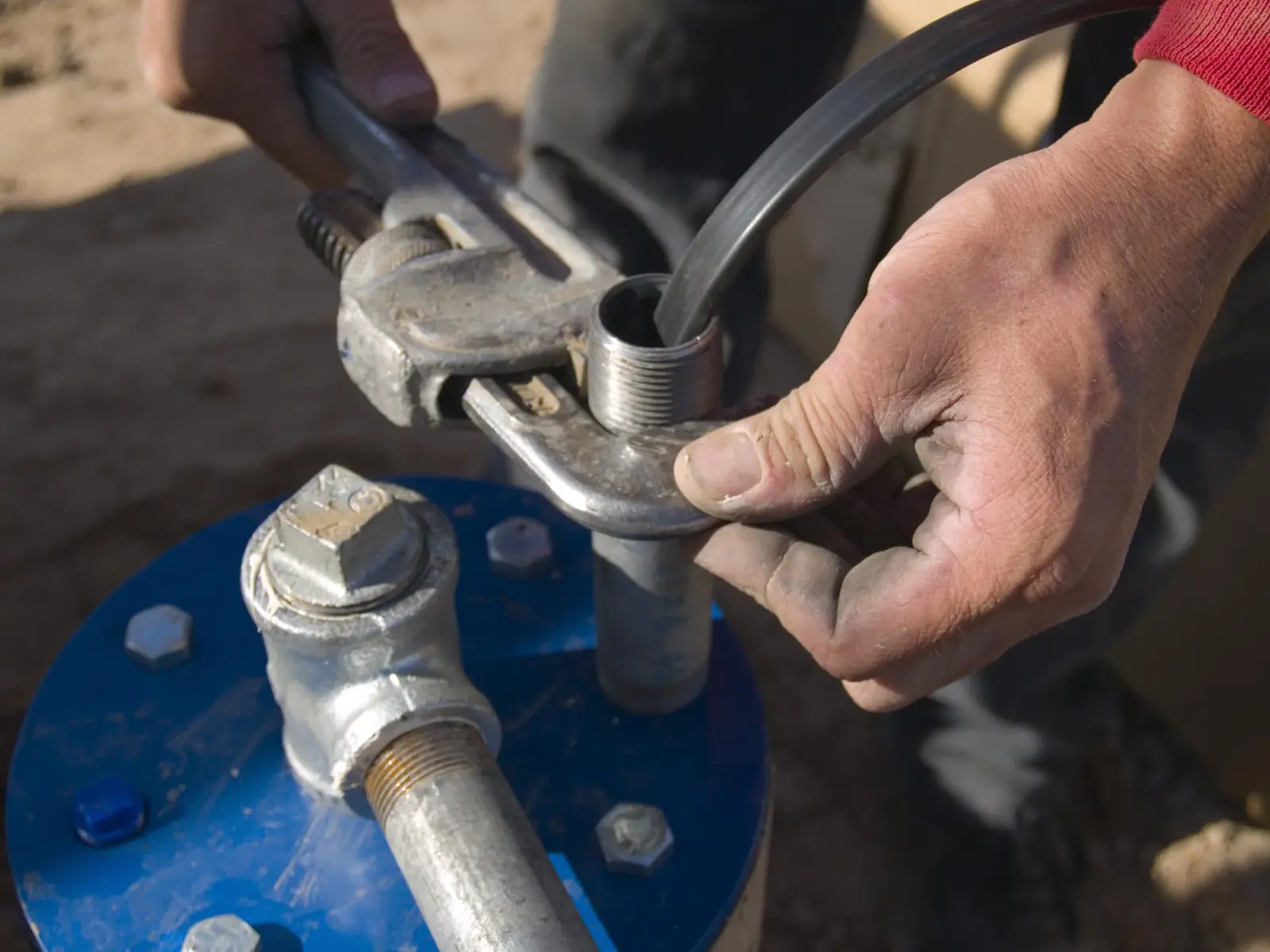
Well pump repair is usually best when the failure involves a replaceable component and the pump remains reasonably young, correctly sized, and otherwise dependable. In the well pump replacement vs repair decision, replacement becomes more practical when the pump is old, repeatedly failing, inefficient, badly damaged, or expensive to remove and repair.
The right choice requires testing the water system, not guessing from low pressure or no water alone. Pressure tanks, switches, wiring, controls, leaks, and well yield can create similar symptoms. Accurate diagnosis protects your budget and water supply.
Is It Better to Repair or Replace a Well Pump?
Repair is generally sensible when testing identifies a limited problem, such as a failed pressure switch, control box, capacitor, wiring connection, check valve, or pressure-tank issue. Replacement becomes more reasonable when the pump itself has failed, major components are worn, or the system has required several recent service calls.
Compare Total Value, Not Only Today’s Bill
Consider the pump’s age, condition, efficiency, depth, removal labor, and remaining expected life. A repair that costs much less than replacement may be worthwhile when the equipment has years of useful service left.
A costly repair on an aging pump may only postpone another outage. The decision should also account for the pressure tank, controls, drop pipe, cable, and well yield. Replacing a pump without correcting short cycling, voltage problems, or inadequate water supply can shorten the new equipment’s life.
A repair can be the economical choice when the contractor finds a healthy motor and a failed external component. Replacement may be wiser when labor to pull a deep pump represents much of the bill. Homeowners should also consider outage risk.
A household with livestock, medical needs, or no practical backup water source may value the predictability of new equipment more highly. The decision should balance immediate cost with expected service life, future labor, warranty protection, and the consequences of another unexpected failure.
How Much Does Well Pump Repair Cost Compared to Replacement?
Current national estimates place many well pump repairs around $300 to $600, although difficult access, deep pumps, major electrical work, or component replacement can increase the price.
Replacement commonly costs much more because the job includes a new pump, removal labor, wiring or piping work, testing, and reinstallation. Recent estimates place many replacements near $950 to $2,650, with an average around $1,800.
Ask for an Itemized Comparison
A useful estimate should separate:
- Diagnostic testing
- Pump and motor
- Pipe and electrical cable
- Controls and pressure switch
- Pressure-tank work
- Labor and lifting equipment
- Water-system testing
- Disposal and cleanup
- Warranty coverage
Depth can substantially change labor because a deep submersible pump requires more pipe, wire, handling time, and lifting equipment.
Do not compare a repair quote with a replacement quote that includes different work. Request matching scopes and ask what additional defects might be discovered after the pump is pulled.
When Should a Well Pump Be Replaced Instead of Repaired?
Replacement is often preferable when the pump has reached an advanced age, repeatedly loses pressure, runs continuously, produces unusual noise, draws abnormal electrical current, or has a failed motor that is costly to rebuild.
Many residential well pumps provide roughly eight to fifteen years of service, although actual life varies with water chemistry, cycling, installation quality, electrical conditions, and sizing.
Repeated Failures Change the Calculation
Replacement deserves serious consideration when:
- Repair approaches a large percentage of replacement cost
- The pump has failed several times
- Correct parts are unavailable
- The pump is badly corroded
- The motor has burned out
- Capacity no longer meets household demand
- Efficiency has declined significantly
- The pump was improperly sized
- Pulling the pump is unusually expensive
Installing a larger unit does not solve a low-yield well and may create excessive cycling or drawdown.
Can an Old Well Pump Be Repaired?
Yes, an older pump can sometimes be repaired when the problem involves accessible controls or another serviceable component. However, repairing an old pump becomes less attractive when removal labor is high and the motor, impellers, seals, wiring, or pipe show widespread wear.
Availability and Reliability Matter
Older models may use parts that are discontinued, difficult to source, or expensive. Ask the contractor:
- Which component failed?
- Is the pump itself still healthy?
- Are replacement parts readily available?
- What other wear was found?
- Is the repair covered by warranty?
- What remaining life is realistic?
- Would removal labor be repeated after another failure?
If testing indicates broad deterioration, replacement may provide better long-term value.
How Long Do Repaired Well Pumps Typically Last?
A new pressure switch or control box may allow a healthy pump to operate for years. Repairing a severely worn motor may provide a much shorter result.
Longevity depends on what failed, why it failed, and whether related conditions were corrected.
The Cause Matters More Than the Replaced Part
A pump may fail early because of:
- Frequent short cycling
- A waterlogged pressure tank
- Incorrect pump sizing
- Low well yield
- Sediment or mineral buildup
- Voltage problems
- Damaged wiring
- Dry running
- Poor installation
Replacing one part without resolving the cause can lead to another failure.
Ask the technician to record amperage, pressure, cycling behavior, and flow after repair. Problems involving wiring, voltage, switches, and controls may also point to broader electrical problems within the well system.
What Are the Benefits of Replacing an Aging Well Pump?
A properly selected replacement can improve reliability, restore appropriate pressure and flow, reduce repeated repair costs, and provide current warranty protection.
Replacement Creates an Opportunity to Review the System
During replacement, the contractor can inspect accessible drop pipe, cable, connections, controls, pressure settings, and sanitary wellhead components.
Potential benefits include:
- More dependable water delivery
- Fewer emergency outages
- Correct pump sizing
- Improved electrical performance
- Updated controls
- New warranty coverage
- Better documentation
- Replacement of worn pipe or cable
Replacement offers the best value when the new system addresses both the failed equipment and the conditions that contributed to failure. Professional well pump installation, repair, and replacement can help ensure the new equipment is properly sized and integrated with the rest of the water system.
Homeowners comparing replacement options may also benefit from understanding the factors to consider when planning well pump replacement, including system condition, water demand, and long-term operating costs.
How Can a Professional Determine the Best Option?
A qualified contractor should diagnose the entire system before recommending repair or replacement. Testing may include voltage, amperage, pressure, flow, pressure-switch operation, tank condition, controls, visible wiring, and well recovery.
A professional well inspection can help identify issues that may not be obvious from low pressure or intermittent water supply alone.
North Carolina requires certified well-contractor involvement for regulated well construction, installation, repair, alteration, and abandonment activities.
Expect Evidence Behind the Recommendation
The contractor should explain:
- What tests were performed
- Which component failed
- Why the failure occurred
- Whether the pump must be pulled
- What repair would cost
- What replacement would cost
- Which related parts need attention
- What warranties apply
- How long each option may reasonably serve
For well pump services in Mt. Pleasant, NC, ask whether local health-department coordination, water testing, disinfection, or documentation applies to the work. Homeowners in the area can also review well services available in Mt. Pleasant, NC when evaluating local support.
A professional recommendation should consider reliability, risk, total cost, water demand, and remaining equipment life rather than automatically choosing the largest project.
Key Takeaways
Repair is usually practical when a limited component has failed and the pump remains dependable, correctly sized, and reasonably young.
Replacement may provide better value when the pump is old, repeatedly failing, inefficient, severely damaged, or expensive to remove. Costs vary with depth, access, equipment, pipe, wiring, and related system problems.
A technician should test pressure, flow, electrical performance, controls, and tank operation before recommending either option. Homeowners experiencing pressure changes can also review common causes of well water pressure problems.
Written estimates, warranty details, and an explanation of the failure help homeowners choose confidently and protect long-term water reliability.
Make the Right Investment in Your Water System
Well Doctor LLC can test pump performance, pressure, controls, tank condition, electrical supply, and related components before recommending work.
Share the system’s age, service history, recent symptoms, and available well records. A clear diagnosis can help you compare repair and replacement based on evidence, expected reliability, total cost, and your household’s water needs. If the system has stopped supplying water entirely, emergency no-water service may be appropriate before deciding whether repair or replacement is required.