

One shower works perfectly fine. The water comes out at a comfortable pressure, and everything seems normal. But the moment someone turns on a second shower, both showers slow down. Suddenly, what should be a normal morning routine becomes a struggle to get enough water.
If your well water pressure drops with two showers running, the problem may involve limited pump capacity, insufficient well yield, a clogged filter, restricted plumbing, or pressure-control equipment that isn’t working correctly. A booster pump may help in certain situations, but it cannot increase the amount of water your well naturally supplies.
At Well Doctor LLC, we help homeowners in Charlotte, NC, and surrounding communities understand why their private well systems struggle during everyday water use. When two showers cause a pressure drop, the first step isn’t necessarily installing a bigger pump. It’s figuring out where the system is falling behind.
Here’s what may be happening and how a professional assessment can identify an appropriate solution.
Pressure Versus Available Flow: Why the Difference Matters
Water pressure and water flow are related, but they aren’t the same thing.
Understanding the difference helps explain why one shower can work normally while two showers struggle.
What Is Water Pressure?
Water pressure describes the force available to move water through your home’s plumbing system.
It’s commonly measured in pounds per square inch, or PSI.
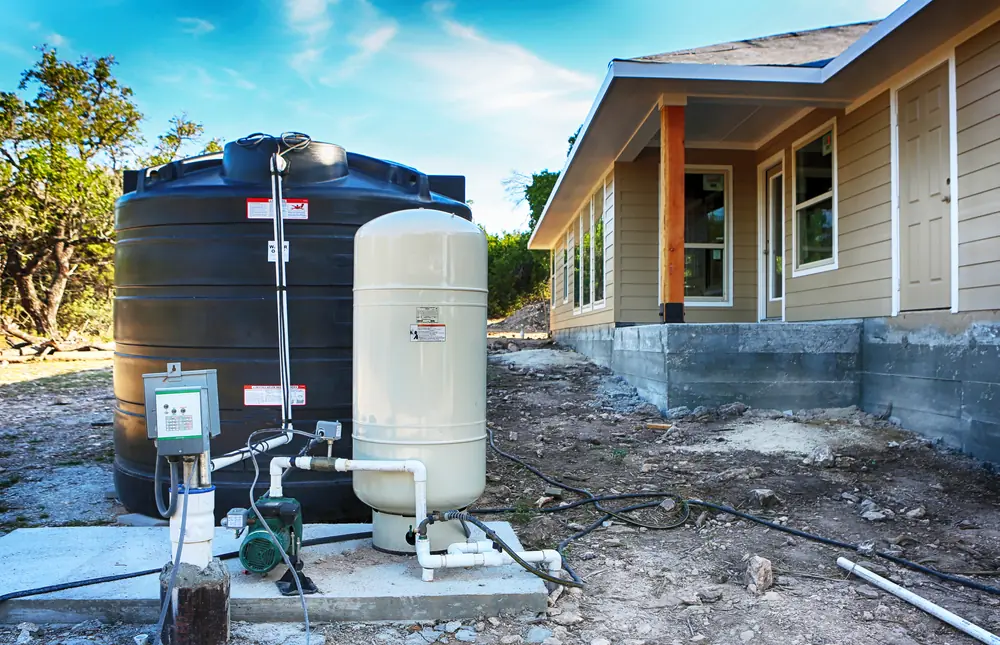
In a typical private well system, a well pump moves water from the ground into the plumbing system, while a pressure tank and controls help maintain pressure as water is used.
When you open a shower valve, that pressure helps deliver water through the pipes and showerhead.
However, having an adequate pressure reading when no water is running doesn’t necessarily mean the system can maintain that pressure during heavy use.
What Is Water Flow?
Water flow describes how much water moves through the plumbing system over a period of time.
It’s commonly measured in gallons per minute, or GPM.
Every shower, sink, washing machine, and outdoor faucet adds to your home’s water demand.
When one shower is running, your well system may easily supply the required amount.
But when someone starts a second shower, the combined demand increases.
If the pump, plumbing, filtration system, or available well supply cannot keep up, pressure at the showers may drop.
Why One Shower Works but Two Don’t
Think of your water system as a delivery network.
Your well provides the water, the pump moves it, and your plumbing carries it to each fixture.
When only one shower is running, there may be enough capacity for comfortable flow.
When a second shower turns on, the demand increases.
If the system cannot deliver enough water at the required pressure, the available flow at each shower may decrease.
This doesn’t automatically mean your well is failing.
The restriction could be somewhere between the well and the showerheads.
That’s why we recommend identifying the cause before replacing equipment or changing pressure settings.
Household Demand and Well System Capacity
A private well system should be matched to the household’s expected water use.
A home with one bathroom may have different requirements from a home with several bathrooms, laundry appliances, and outdoor irrigation.
If your home’s water demands have changed over time, the existing system may no longer perform the way you expect.
Your Well Pump May Not Meet Simultaneous Demand
A well pump has limits on the amount of water it can deliver at a given pressure.
If both showers together require more flow than the pump can provide under the system’s operating conditions, you may notice a drop in pressure.
For example, suppose each shower requires a certain flow rate to operate comfortably.
One shower may stay within the pump’s available capacity.
But running both at once may push demand beyond what the pump can continuously deliver.
This is only an example of how demand affects performance. The actual cause requires system measurements.
A professional can evaluate pump performance and compare it with the household’s water requirements.
The Pressure Tank Also Matters
Your pressure tank helps provide stored water under pressure between pump cycles.
The tank is not an unlimited water supply.
When demand increases, the stored drawdown volume can be used more quickly, and the pump must provide ongoing flow.
If the tank is incorrectly charged, damaged, or otherwise malfunctioning, you may notice additional pressure fluctuations or unusual pump cycling.
A larger pressure tank can increase usable drawdown and reduce certain cycling problems, but it doesn’t automatically increase the pump’s continuous flow capacity.
That distinction matters when deciding whether tank replacement or another improvement is appropriate.
Well Yield Can Limit the Entire System
Well yield refers to how much water a well can sustainably provide under particular conditions.
Even a powerful pump cannot continuously deliver more water than the well can supply over time.
If household demand exceeds the well’s sustainable yield, water levels may decline during prolonged pumping.
The result can include reduced flow, interrupted water delivery, or increased strain on equipment.
Adding a booster pump without addressing insufficient source water will not solve the underlying supply problem.
At Well Doctor LLC, we believe the available water supply should be understood before recommending equipment designed to increase pressure.
Household Changes Can Reveal an Existing Limitation
Sometimes homeowners notice pressure problems after their daily water use increases.
Maybe more family members now use the bathrooms at the same time.
Perhaps a bathroom was added during a renovation, or laundry and irrigation frequently run while someone is showering.
These changes may expose a limitation that wasn’t obvious under lighter demand.
If your pressure has always dropped during simultaneous showers, the system’s capacity or layout may need to be evaluated.
If the problem started recently, it may indicate a developing equipment issue or restriction.
Restrictions, Leaks, and Equipment Checks
Not every pressure problem starts at the well.
Sometimes the pump is capable of supplying enough water, but a restriction prevents adequate flow from reaching the showers.
Other times, a malfunctioning component causes pressure to drop more than expected.
Can a Clogged Filter Reduce Shower Pressure?
Yes.
Whole-house sediment filters and certain water treatment systems can restrict flow as they become clogged or if they are undersized for the home’s demand.
Water may still pass through adequately when one fixture is open.
But when a second shower starts, the additional flow increases the pressure loss across the restricted equipment.
Both showers may then deliver less water.
This is one reason water filtration equipment should be included in a pressure assessment.
If your home has sediment filtration, an iron filter, water softener, or another treatment system, tell your well technician.
Our well water filtration system installation services address water treatment equipment and appropriate system selection for homeowners in the Charlotte area.
However, filtration systems shouldn’t be removed or bypassed without considering their purpose, the equipment manufacturer’s instructions, and any water-quality concerns.
Restricted Pipes and Valves
Water must travel through your home’s supply lines before reaching the showers.
Undersized piping, mineral buildup, internal corrosion, partially closed valves, or other restrictions can create excessive pressure loss when demand increases.
A pipe may carry enough water for one shower but become a bottleneck when two fixtures operate together.
This can happen even when the well pump itself is functioning correctly.
A professional assessment can help locate restrictions and determine whether repair, maintenance, or plumbing changes are appropriate.
Hidden Leaks Can Reduce Available Water
A leak can also affect system performance.
Water escaping from an underground line or another part of the plumbing system may reduce the amount available for household fixtures.
Depending on the leak, you might notice unusual pump operation, changing pressure, or water use that doesn’t match your normal routine.
Not all leaks create visible puddles.
If your system has experienced an unexplained pressure change, a technician may need to evaluate potential water loss before recommending a pressure upgrade.
Pressure Switch and Pump Problems
The pressure switch helps control when a conventional well pump starts and stops.
If the control system isn’t operating correctly, pressure may fluctuate or fail to recover as expected.
A worn or failing pump may also struggle to maintain flow during higher demand.
Possible symptoms include:
- Pressure that falls and doesn’t recover normally
- Frequent pump starts and stops
- Unusually long pump run times
- Inconsistent flow throughout the house
- Changes in pump sounds
- A sudden loss of water pressure
These signs don’t identify one specific failure.
Pump, electrical, control, and tank problems can produce overlapping symptoms.
Because private well equipment involves electricity, pressurized components, and specialized controls, leave equipment adjustments and repairs to qualified professionals.
For more background, read our guide to what causes low water pressure in a private well system.
When a Booster Pump May Help
A water pressure booster pump is designed to increase pressure in a suitable water supply system.
For some homes, boosting pressure can improve performance when several fixtures are operating.
However, the decision should follow a demand-based assessment.
What Does a Booster Pump Actually Do?
A booster pump increases the pressure of water entering the part of the plumbing system it serves.
In an appropriately designed installation, it can help maintain usable pressure at fixtures when demand changes.
Some systems also use variable-speed technology to respond to changing water use.
But a booster pump isn’t a replacement for adequate source water.
If your well cannot provide enough water, additional pumping pressure alone won’t create the missing supply.
The pump, available inlet water, storage, piping, and pressure controls all need to work together.
When Booster Pump Installation May Make Sense
A booster pump may be considered when an assessment confirms that the water supply is adequate but the delivery pressure is insufficient.
For example, a home may have sufficient source flow but experience pressure losses through a distribution system that needs a properly designed pressure solution.
Before recommending installation, a technician should evaluate the existing well pump, plumbing restrictions, pressure requirements, and water demand.
At Well Doctor LLC, our booster pump repair and installation services are intended to address pressure-related equipment concerns.
We encourage homeowners to have the system evaluated before deciding whether a booster pump is the right investment.
How Is a Booster Pump Sized for a Home?
A booster pump shouldn’t be selected simply because a home has two showers.
Proper sizing considers the actual water demand and the conditions under which the system must operate.
A professional may evaluate:
- Expected simultaneous water use
- Required flow in gallons per minute
- Available inlet pressure and flow
- Desired delivery pressure
- Elevation differences within the home
- Pressure losses through pipes and treatment equipment
- Existing pressure tanks and control systems
- Pump manufacturer requirements
- The well’s available supply or storage arrangement
Oversizing equipment can create its own problems.
Excessive pressure may stress plumbing, while an unsuitable pump may operate inefficiently or without enough water at its inlet.
The right solution should match the complete system, not just the number of bathrooms.
When Another Solution Is Needed
Sometimes the most effective repair doesn’t involve adding a booster pump at all.
If the real problem is a clogged filter, worn well pump, inadequate supply, or malfunctioning pressure tank, those conditions need to be addressed directly.
When the Existing Well Pump Needs Attention
If testing shows that the well pump cannot meet demand because it is worn, damaged, or incorrectly matched to the system, repair or replacement may be appropriate.
The decision depends on pump performance, equipment condition, water availability, and household requirements.
Installing a booster pump downstream may not correct an underlying well pump failure.
A professional should determine which component is actually limiting performance.
When Filtration or Plumbing Is the Restriction
If pressure readings and flow testing indicate a significant restriction across a filter or piping section, correcting that bottleneck may improve water delivery.
For example, a properly sized and maintained filtration system should be able to handle the intended household flow within its design limits.
If equipment has become clogged or was not sized for simultaneous demand, a technician may recommend maintenance or system changes.
The appropriate repair depends on the condition of the equipment and the home’s water needs.
When the Well Cannot Sustain the Demand
Limited well yield requires a different conversation.
Depending on the findings, options might include managing peak water use, evaluating water storage, or considering other well-system improvements.
Some installations use storage tanks and a separate pressure-delivery system to manage the difference between a well’s production rate and household demand.
These arrangements require careful design and suitable controls.
A booster pump may be part of a properly engineered storage-and-delivery system, but it cannot independently solve inadequate well production.
The National Ground Water Association’s Well Owners Guide emphasizes the importance of considering pump capacity, pressure tanks, well supply, and household demand together.
Why Guessing Can Become Expensive
Replacing the wrong component can leave you with the same pressure problem after the work is complete.
A larger pump may not solve a clogged filtration system.
A new pressure tank won’t necessarily correct inadequate continuous flow.
And increasing pressure settings without verifying equipment limits can create additional risks.
The goal is to identify the limitation before making changes.
At Well Doctor LLC, we recommend testing the system rather than choosing repairs based only on the symptom.
Schedule a Demand-Based Assessment
If both showers slow down whenever they’re used together, a demand-based assessment can help identify what’s happening.
Rather than checking pressure at only one faucet, the technician can evaluate how the system behaves as water use increases.
What Happens During a Professional Assessment?
Depending on the installation and symptoms, a well system professional may:
- Measure pressure when fixtures are off and running
- Compare flow under different levels of household demand
- Evaluate well pump performance
- Check pressure tank operation
- Review pressure switch or control settings
- Assess filters and treatment equipment for restrictions
- Inspect relevant plumbing and valves
- Consider the well’s available water supply
- Determine whether booster equipment is appropriate
Not every home requires exactly the same tests.
The technician should select the checks needed to identify the cause.
What Should Homeowners Tell the Technician?
Before scheduling service, think about when the problem occurs.
Does pressure drop immediately when the second shower starts?
Does it continue falling the longer both showers run?
Does the problem also happen when a washing machine, dishwasher, or outdoor faucet is operating?
Is the issue worse at certain times of day?
Have you recently changed filters, added plumbing fixtures, or noticed unusual pump cycling?
These details can help narrow the assessment.
You don’t need to adjust electrical controls, pressure switches, or tank settings yourself.
Clear observations are often more useful than attempting repairs before the cause is known.
Frequently Asked Questions About Well Water Pressure and Two Showers
Why Does Pressure Drop When Two Showers Run?
Pressure may drop because the combined water demand exceeds what the system can deliver at the required pressure. Possible causes include limited pump capacity, low well yield, restricted plumbing, clogged filtration equipment, or malfunctioning pressure controls. A professional can measure pressure and flow during simultaneous use to identify the limitation.
Will a Booster Pump Fix Low Well Yield?
No. A booster pump increases water pressure but cannot create additional groundwater. If the well cannot sustain the required demand, the system may need water-use management, suitable storage, or another professionally designed improvement. The well’s available supply should be evaluated before booster equipment is selected.
Can a Clogged Filter Reduce Shower Pressure?
Yes. A clogged or undersized whole-house filter can create significant pressure loss as water flow increases. One shower may work acceptably while two showers reveal the restriction. Filtration equipment should be checked according to manufacturer requirements as part of a professional system assessment.
How Is a Booster Pump Sized for a Home?
Sizing considers simultaneous water demand, available inlet pressure, flow requirements, piping losses, elevation, and existing system components. The pump must also be compatible with the available water supply. A qualified professional should verify these conditions and manufacturer specifications before recommending equipment.
Does a Bigger Pressure Tank Mean Better Shower Pressure?
Not necessarily. A larger pressure tank can provide more usable drawdown volume and influence pump cycling, but it doesn’t increase the well pump’s continuous flow capability. If the pump or water source cannot meet demand, tank size alone may not resolve the problem.
Should I Raise My Well Pressure Switch Settings?
Don’t change pressure switch settings without checking the pump, tank, piping, and equipment ratings. Higher settings may not solve a flow limitation and can create operating or safety problems if the components are unsuitable. A qualified well technician can determine whether changes are appropriate.
Get Help With Well Water Pressure Problems in Charlotte, NC
When two showers can’t run comfortably at the same time, it’s tempting to assume you need a bigger pump.
But the best solution depends on what’s actually limiting your water system.
At Well Doctor LLC, we help homeowners in Charlotte, NC, and surrounding communities troubleshoot private well pressure problems, evaluate equipment, and understand their repair options.
Whether the issue involves your pump, pressure tank, filtration system, plumbing restrictions, or water supply, our goal is to identify the cause before recommending a solution.
If testing shows that a booster pump is appropriate, we can discuss the equipment and service options that fit your installation.
If another component needs attention, we’ll explain why that issue should be addressed first.
Learn more about our booster pump repair and installation services, or contact Well Doctor LLC to request a well water pressure assessment.
Let’s find out why your showers lose pressure and what your well system actually needs to handle your household’s water demand.